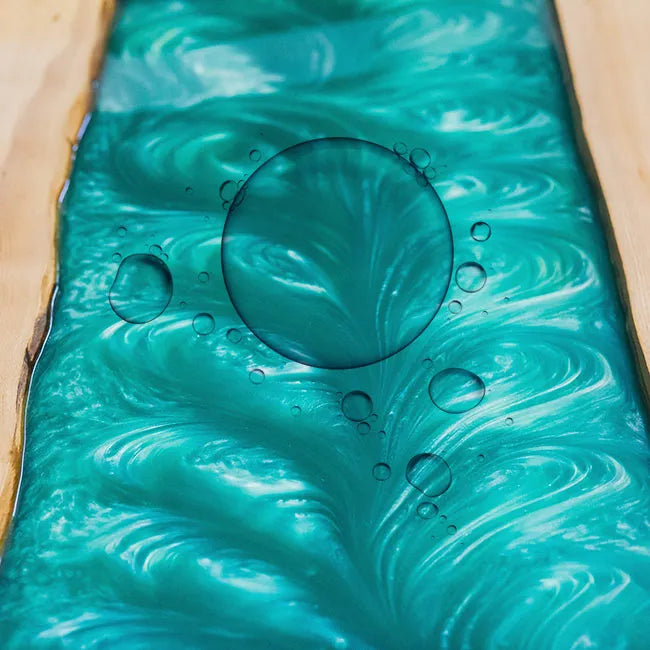
Using epoxy resin in creative projects offers endless potential, but the hassle of dealing with annoying air bubbles can quickly spoil the shine of the finished artwork. Don't panic, though – with a few simple steps, you can easily overcome this challenge and give your epoxy resin creations the perfect finishing touch.
A crucial step in avoiding air bubbles is the correct mixing process . Be sure to mix the resin and hardener carefully and slowly . Rapid stirring can trap air. Using disposable cups and stirring sticks also minimizes the risk of contamination and introducing additional air. Furthermore, avoid using white paper cups, as these can significantly cloud the epoxy resin.
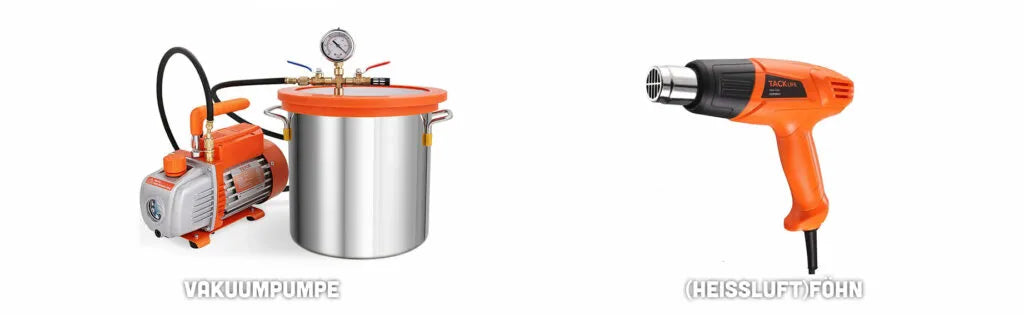
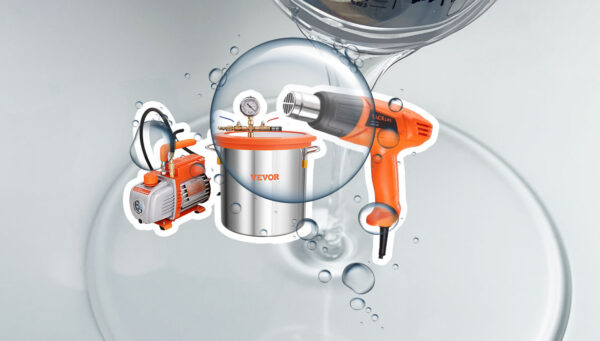
Before pouring , it is recommended to let the mixed resin-hardener combination stand for a short time. This allows any air bubbles to rise to the surface and burst . Afterwards, you can remove any remaining bubbles using a vacuum pump .
Precision is crucial in the actual casting process. A thin, even pour prevents air from being trapped. It's better to work with several thin layers than a single thick one to minimize the likelihood of air bubbles. Furthermore, the pour should be made from a moderate height so that the epoxy resin doesn't hit the surface too hard.
After pouring, you can gently run a hairdryer (on the lowest setting) or a heat gun over the surface to release any trapped air bubbles. Alternatively, you can use a blowtorch or a simple long-reach lighter, briefly flicking the flame over the surface to warm the resin.
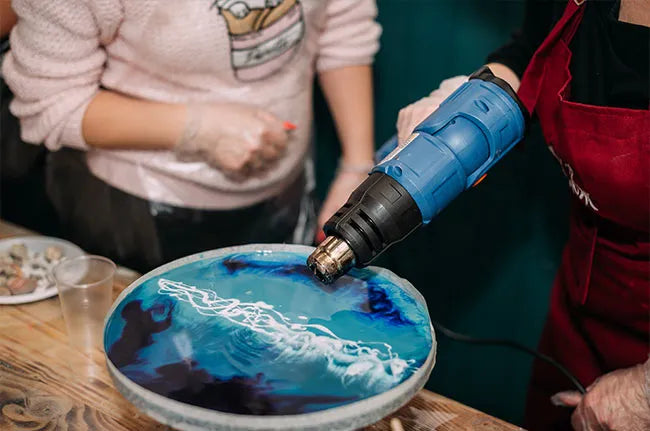
Room temperature also plays a role. Ensure the resin is processed at a suitable temperature to facilitate degassing . If necessary, allow it to reach room temperature before use.
If you follow these instructions, you should no longer have any problems with air bubbles in your epoxy resin.
PRO TIP: Our epoxy resin cleaner It consists of 99.9% pure isopropanol. Spray a light mist of it onto the surface of your epoxy resin after pouring. This reduces surface tension and causes any air bubbles on the surface to burst .
Overall, mixing and using epoxy resin requires a certain degree of care and precision, but with proper preparation and knowledge of the basic steps, you can create fascinating and durable artwork and surfaces. Take the time to read and follow the instructions carefully, and be patient throughout the process to achieve the best results. With practice and experimentation, you will be able to further refine your epoxy resin skills and create unique works of art.

Please fill out the following form to declare your withdrawal from the contract.