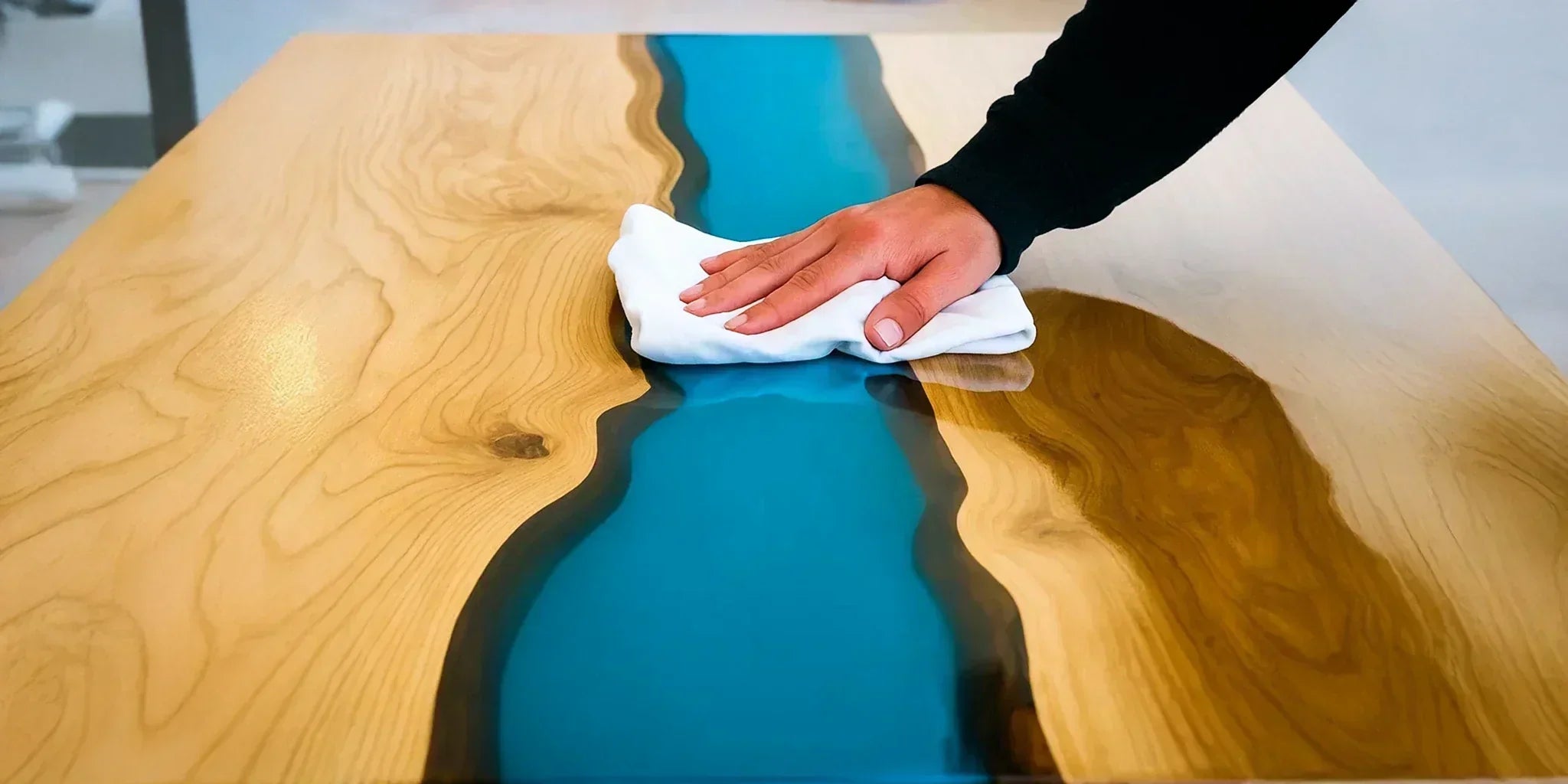
Epoxy resin impresses with its crystal-clear appearance and versatile applications – whether in art projects, furniture, or as a sealant. However, many users are familiar with the typical problems: bubbles in the epoxy resin , a sticky surface , or a milky film (amine blush) .
At Dein-Epoxidharz, we want to show you why these errors occur, how to avoid them, and what steps to take if they do happen. This way, your project is guaranteed to succeed.
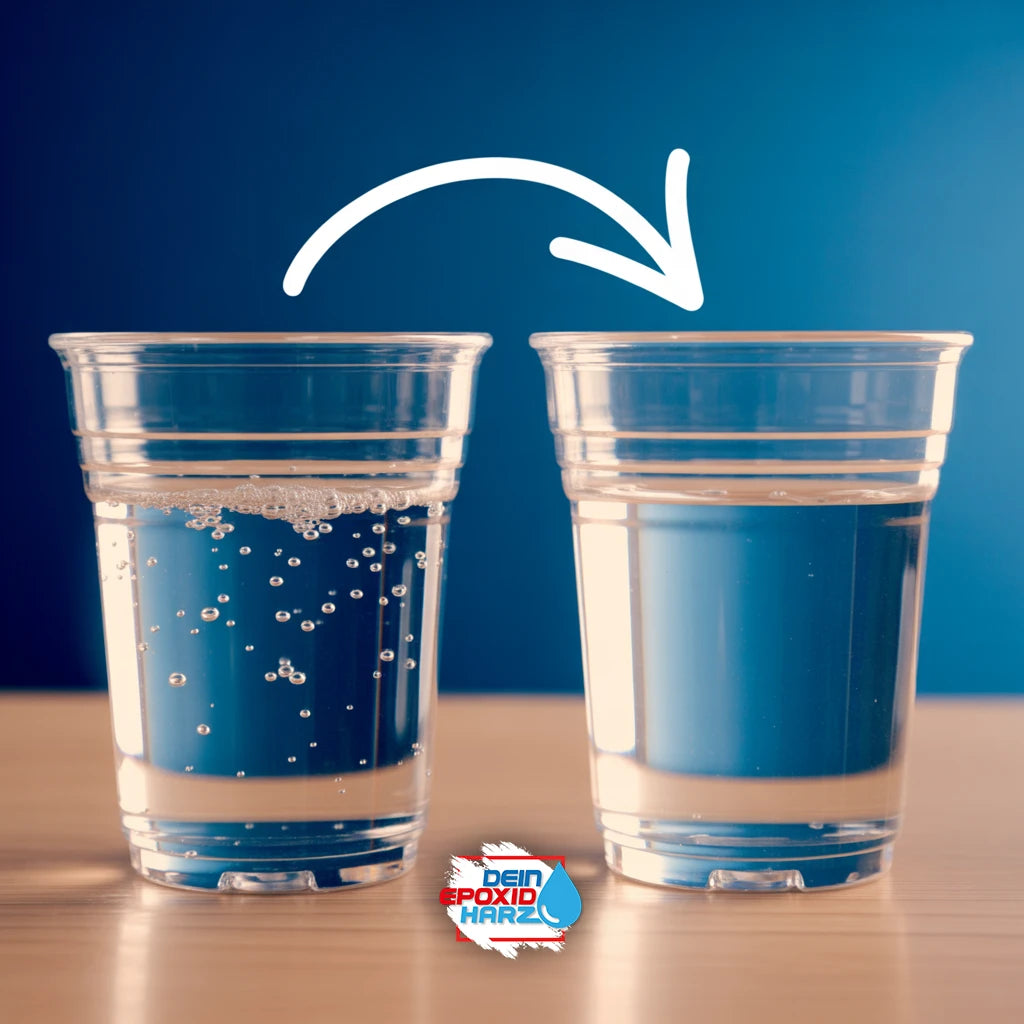
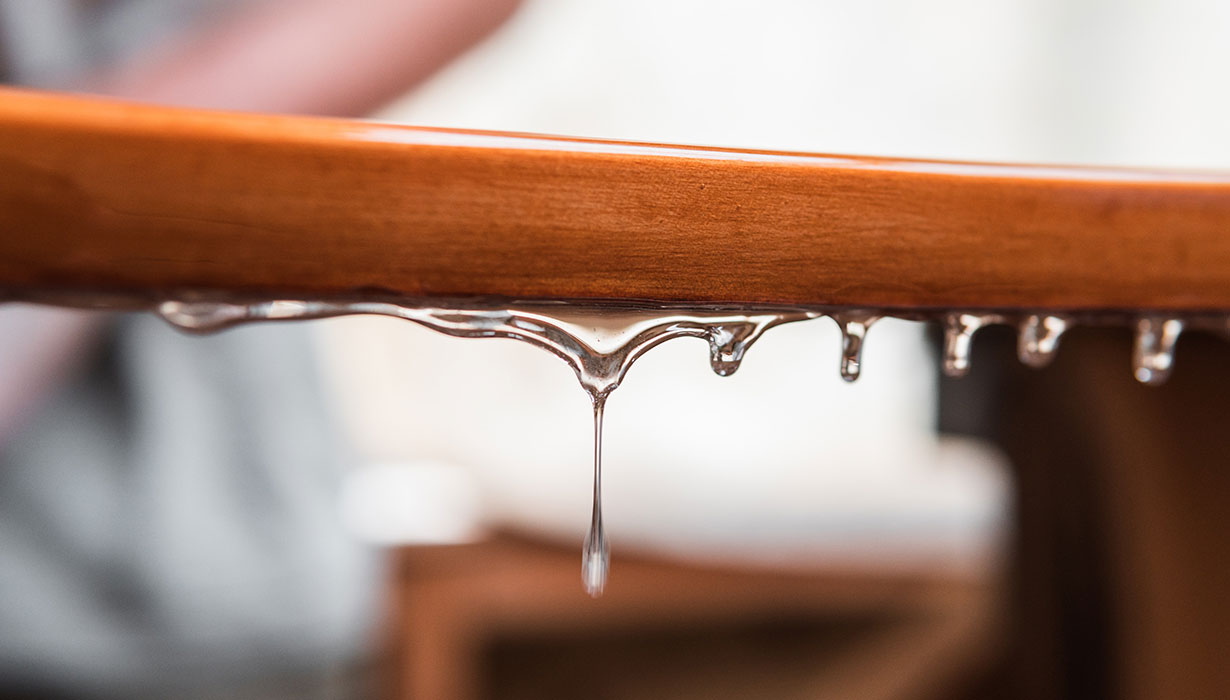
Bubbles in epoxy resin are one of the most common problems . They usually arise from air that gets into the mixture during mixing or escapes from the substrate. Wood, in particular, is known to release trapped air as soon as it comes into contact with resin. Resin that is too cold and has high viscosity also traps air bubbles for longer, preventing them from rising to the surface.
The good news: With the right approach, bubbles can be largely avoided. We recommend mixing the resin slowly and thoroughly, making sure to include the bottom and sides of the mixing container, without creating a foam. Allow the mixture to stand for a few minutes before pouring to allow any trapped air to escape. When working on wood, the surface should be sealed beforehand to prevent outgassing. If small bubbles do appear, they can easily be removed with a hot air gun or a brief exposure to a flame.
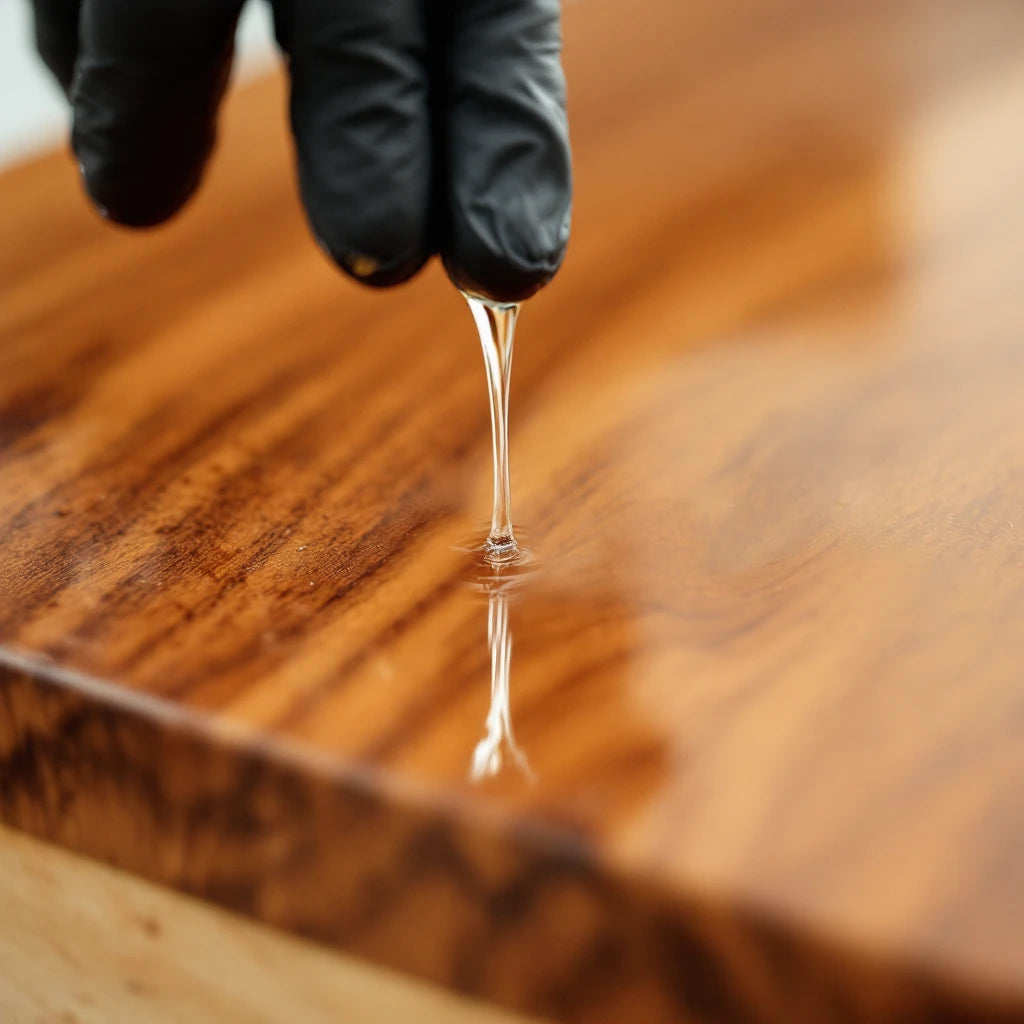
A second, widespread problem is a sticky or soft surface after curing. Almost always, the cause lies in an inaccurate mixing ratio of resin and hardener, or in uneven stirring. Even small deviations result in an incomplete chemical reaction. Too low a temperature or high humidity can also interfere with curing.
To avoid this, we generally recommend measuring by weight, never by volume (except for the Resin Art Series) . This is the only way to ensure that the resin and hardener are in the exact ratio. Furthermore , mix thoroughly and for a sufficient amount of time until a uniform mixture is achieved. If a sticky spot does occur, patience is the most important first step: Curing can still be completed at room temperature. If the surface remains sticky even after a longer period, light sanding and applying a new, correctly mixed layer of epoxy resin will help.
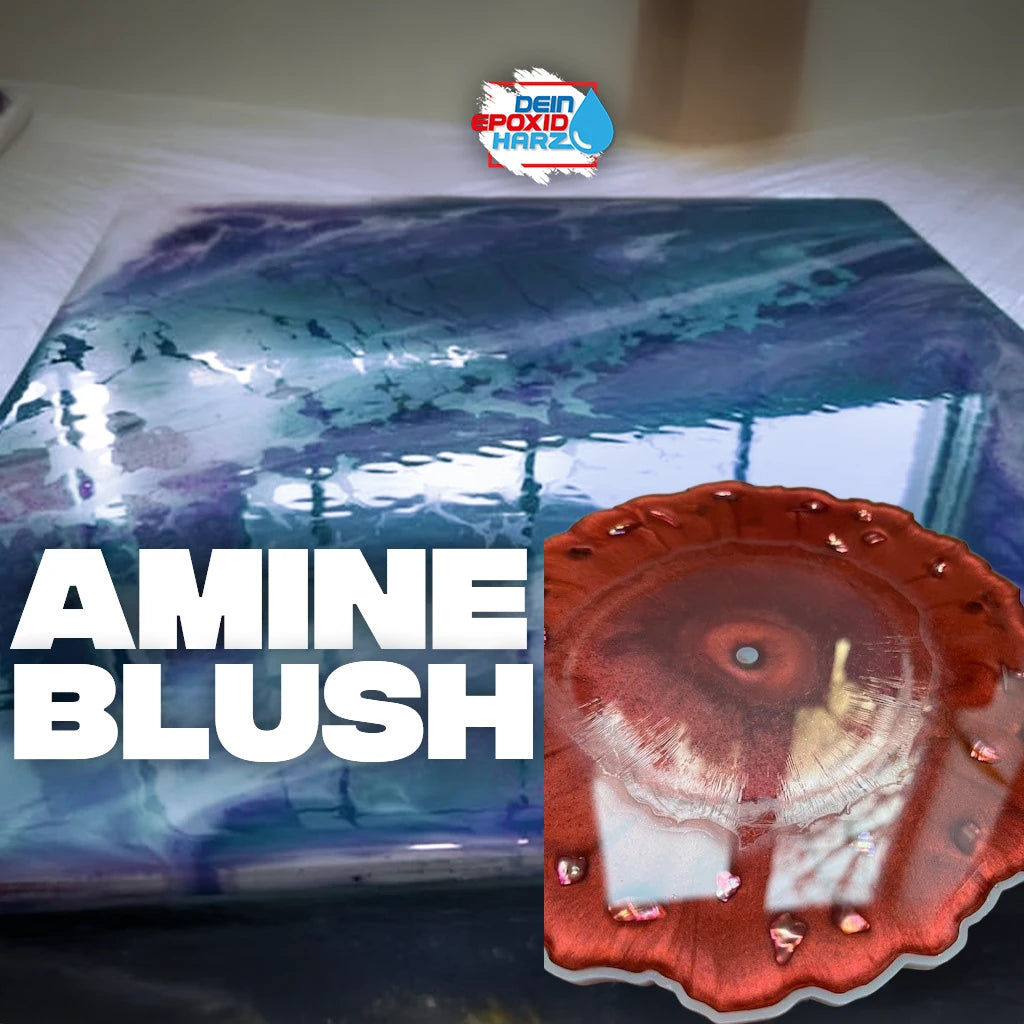
Another phenomenon that initially unsettles many users is the so-called amine blush. This is a waxy, sometimes milky-white layer that settles on the surface. It is caused by the reaction of the hardener with moisture and carbon dioxide from the ambient air. The result is unsightly, but does not affect the stability of the resin.
Removal is simple : Warm water and a little soap are usually enough to loosen the coating. Afterwards, the area should be thoroughly dried and lightly sanded before applying another layer of resin. Amine blush can therefore be easily removed if you know how to deal with it.
Amine blush occurs when the amines contained in the hardener react with humidity and carbon dioxide during curing. This results in the formation of a milky-white, sometimes waxy film on the surface. The problem is particularly common when working in high humidity or in excessively cold rooms.
Fortunately, amine blush is easy to remove:
To prevent amine blush from forming in the first place, it helps to control working conditions:

Please fill out the following form to declare your withdrawal from the contract.